
Choosing the best meat slicer for bacon can be a bit overwhelming, especially with so many models promising sharp blades, adjustable thickness, and easy cleaning. For home kitchens, the main goal is often to find a slicer that delivers precise, even slices while keeping safety and convenience in mind.
Whether you want to prepare bacon for breakfast, sandwiches, or meal prep, a reliable slicer can make the process faster and more consistent. Many slicers are also versatile enough to handle other meats, cheeses, and even vegetables, while remaining compact for easy storage.
To help you decide, we’ve compiled a guide featuring top-rated slicers that combine durability, precision, and user-friendly features. With options available on Amazon, these models have received positive feedback for performance, safety, and ease of cleaning.
Using the right slicer can make food preparation more enjoyable and efficient, giving you perfect bacon slices every time without the hassle of manual cutting.
Best Meat Slicer for Bacon – Top List
- OSTBA 200W Electric Deli Food Slicer – Top-Rated Home Choice
- Befen Manual Frozen Meat Slicer – Best Budget-Friendly Option
- Jonscook Fresh Meat Slicer – Adjustable Slices, Meal Prep Ready
- Borlebbi 200W Electric Food Slicer – Reliable and Easy to Clean
- Borlebbi 200W DC Motor Quiet Meat Slicer – Precision & Low Noise
- Moongiantgo Biltong Slicer – Best for Specialty Herbs & Jerky
- XinChangShangMao Manual Frozen Meat Slicer – Durable Home Cutter
Best Meat Slicer for Bacon
1. OSTBA 200W Electric Meat Slicer with 2 Blades
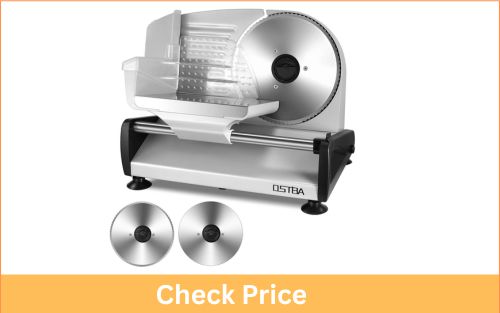
A few days ago, I picked up this OSTBA meat slicer mainly to handle bacon at home. I used to rely on store-bought slices, but the thickness was never quite right. When the package arrived, everything was neatly organized inside main slicer unit, two stainless steel blades (serrated and non-serrated), a food pusher, and the manual. The unboxing felt simple and well thought out, nothing messy or confusing.
Design & Build Quality: Right out of the box, the slicer feels solid and well-built for home use. It weighs around 8.6 pounds, so it doesn’t feel flimsy or unstable. Once I placed it on the countertop, the suction cup feet held it firmly in place, even while slicing tougher meats. The stainless steel finish gives it a clean, slightly premium look without feeling overly bulky.
Adjustable Thickness Control: One of the most useful features here is the adjustable thickness dial. You can go from paper-thin slices to about 3/4 inch. I tested it with bacon, and the thin slices came out perfect for crispy cooking, while thicker cuts worked great for hearty breakfast portions. The control feels precise, and I didn’t have to guess or redo slices.
Capacity & Real Performance: With a 200W motor, I initially thought it might struggle, but in real use, it handled quite well. For best results, I found that slightly chilled or semi-frozen bacon works best. I sliced a full slab at home, and the cuts came out consistent. Only the final uneven pieces needed a bit more attention, which is pretty normal for home slicers.
Motor Power & Cutting Experience: This isn’t an industrial deli slicer, so it won’t match the speed of a shop machine. But for home use, it feels just right. The blade rotates at a steady pace and delivers clean cuts. I noticed that letting the blade do the work gives the best results pushing too hard can affect slice consistency.
Dual Blade Advantage: The two included blades actually make a noticeable difference:
- Serrated blade works best for bacon, frozen meat, and deli cuts
- Non-serrated blade is better for bread, fruits, and cheese
I switched between blades while testing, and it definitely adds versatility instead of limiting the slicer to just one type of food.
Ease of Use: Using the slicer is straightforward. You adjust the thickness, press both safety buttons, and guide the food with the pusher. The dual-button system might feel unusual at first, but it quickly becomes second nature. It also adds a layer of safety, especially if you’re using it regularly.
Cleaning & Maintenance: Cleaning turned out to be easier than expected. The blade, food carriage, and other parts can be removed without much effort. After slicing, I was able to clean everything in just a few minutes. Since many parts are dishwasher safe, maintaining hygiene doesn’t feel like a chore.
Safety Features: The child lock system is a great addition. You need to press two buttons at the same time to start the machine, which prevents accidental operation. Combined with the anti-slip base, it feels safe and controlled during use.
Best For
This slicer is ideal for home users who want consistent slices of bacon, deli meat, cheese, or even bread without relying on store cuts.
What We Like
- Strong 200W motor handles regular slicing without struggling
- Dual blades increase flexibility for different types of food
- Thickness adjustment gives precise control over every slice
- Stable suction base keeps the unit firmly in place
- Removable parts make cleaning quick and simple
- Built-in safety lock prevents accidental starts
What We Don’t Like
- The final uneven meat pieces can be a bit tricky to slice
- Not designed for heavy-duty or fully frozen thick cuts
2. Befen Manual Frozen Meat Slicer

Few days after trying an electric slicer, I wanted something simpler for thin slicing frozen meat, especially for hot pot and BBQ. That’s when I tried this Befen manual meat slicer. The packaging was pretty complete it came with the slicer unit, a separate meat holder, two blades (one pre-installed), suction cups, meat bags, and a small tool kit. Everything was packed securely, and setup didn’t take long.
Design & Build Quality: The first thing I noticed is that this slicer feels sturdy despite being manual. It’s made from upgraded stainless steel, and the body feels thicker compared to similar models I’ve seen before. At around 5.8 pounds, it’s not too heavy, but still solid enough for regular kitchen use. The overall design is simple, no unnecessary parts, which actually makes it easier to handle.
Adjustable Thickness Control: This slicer gives you a wide thickness range from ultra-thin 0.2mm slices up to thicker cuts around 20mm. I mostly used it for very thin slices, and it worked best there. When slicing frozen beef for hot pot, I was able to get those paper-thin slices that cook quickly and evenly. Adjusting the thickness takes a bit of trial at first, but once you get used to it, it’s easy to control.
Capacity & Real Performance: Since this is a manual slicer, performance depends a lot on how you prepare the meat. I tested it with ribeye and brisket, and the key is freezing the meat properly. When the meat was fully frozen, the slicer handled it smoothly and gave clean, even slices. If the meat was too soft, it became harder to get consistent cuts.
Cutting Experience: Using this slicer feels more hands-on compared to electric ones. You do need to apply some pressure, especially with thicker cuts, but for thin slicing, it’s quite manageable. After a few tries, I found the right angle and motion, and it became much easier. It’s not effortless, but it gives you more control over each slice.
Blade Sharpness & Precision: The blade on this slicer is extremely sharp. I noticed that it slices through frozen meat cleanly without tearing. I used it for bulgogi-style beef and even pork belly, and the slices came out uniform. It also comes with an extra blade, which is a nice bonus for long-term use.
Ease of Use: Setup is simple, and once everything is in place, it’s easy to operate. The meat holder helps guide the food safely, and the slicing motion becomes natural after a few uses. One thing I found helpful is placing it on a lower surface for better leverage, which makes slicing more comfortable.
Cleaning & Maintenance: Cleaning is fairly straightforward, though not as quick as some electric models with removable parts. I usually wipe it down with warm soapy water and rinse carefully. Since the blade is very sharp, you need to be cautious while cleaning. Still, it doesn’t take much time once you get used to it.
Safety Features: There’s a built-in blade guard that helps reduce the risk of accidental cuts. As long as you use the food holder properly and keep your hands away from the blade, it feels safe. That said, this is a sharp manual slicer, so attention is important during use.
Best For
This slicer is ideal for people who regularly prepare hot pot, BBQ, or homemade jerky and want thin, uniform slices without spending extra on pre-cut meat.
What We Like
- Sturdy stainless steel build feels durable and long-lasting
- Extremely sharp blade delivers clean and uniform slices
- Wide thickness range allows flexible slicing options
- No electricity needed, simple and reliable to use
- Extra blade included for extended usability
- Great for bulk meat preparation and saving money
What We Don’t Like
- Requires proper freezing for best performance
- Manual operation needs effort compared to electric slicers
3. Jonscook Manual Fresh Meat Slicer (17 Blades)

A few days ago, I decided to try something different and picked up this Jonscook manual meat slicer. I wanted something simple for quick meal prep without plugging in another appliance. The packaging was minimal but neat. Inside, I found the slicer unit with the blade assembly already set, along with a cleaning brush and protective cover. It felt lightweight right away, which made me curious about how well it would actually perform.
Design & Build Quality: The first thing I noticed is how compact and lightweight it is. At around 1.6 pounds, it’s easy to move and store, even in a small kitchen. The body is made from food-grade material, while the 17 stainless steel blades feel sharp and well-aligned. The suction base holds it in place on smooth surfaces, which helps during slicing, although you still need to use steady motion for best results.
Adjustable Thickness Control: This slicer comes with two thickness options, 2mm and 4mm. I tested both while prepping fresh beef and chicken. The thinner setting worked really well for jerky-style slices, while the thicker one was better for stir-fry or hot pot cuts. It’s not a dial-based system like electric slicers, but the fixed options are practical and consistent.
Capacity & Real Performance: This slicer is designed strictly for fresh, boneless meat, and that’s important to understand. I tried it with fresh chicken breast and slightly chilled beef, and it worked best when the meat was firm but not frozen. Once you get the motion right, it slices an entire piece into multiple thin cuts in one go. Overloading it makes things harder, so cutting meat into smaller chunks first gives better results.
Cutting Method & Experience: Unlike electric slicers, this one uses a sawing motion. You push and pull the blade back and forth, similar to using a hand saw. At first, it felt a bit unusual, but after a few tries, it became smooth and controlled. The key is not forcing the blade downward but letting the motion do the work. When done right, the slices come out evenly.
Multi-Blade Advantage: The 17-blade setup is what makes this slicer stand out. In one pass, it can turn a chunk of meat into multiple even slices. I tested it for making thin strips for stir fry, and it saved a lot of time compared to using a knife. You can also adjust how you place the meat to create strips or smaller cuts, which adds some flexibility.
Ease of Use: Using it is simple once you understand the motion. Place the meat in the container, secure it, and move the blade back and forth. There’s no electricity involved, which makes it convenient for quick tasks. It does require a bit of effort compared to electric slicers, but not as much as hand slicing with a knife.
Cleaning & Maintenance: Cleaning is manageable but requires care because the blades are very sharp. The parts can be detached, and the included brush helps clean between the blades. I found that rinsing immediately after use makes the process much easier. While some parts are technically dishwasher safe, hand washing feels safer for long-term use.
Safety Features: Safety mostly depends on how you handle it. The blades are extremely sharp, so you need to avoid direct contact and use the brush while cleaning. The protective cover is helpful for storage, and the suction base keeps it stable during use.
Best For
This slicer is ideal for people who want a budget-friendly, manual option for prepping fresh meat like chicken, beef, or lamb for meals like stir fry, jerky, or hot pot.
What We Like
- Very affordable compared to electric slicers
- Multi-blade system saves time during meal prep
- Compact and lightweight for easy storage
- No electricity needed, simple manual operation
- Good for slicing fresh meat into thin, even pieces
- Suction base helps keep it stable during use
What We Don’t Like
- Only works with fresh, boneless meat
- Requires manual effort and proper technique
- Not suitable for bacon, frozen, or cooked meat
- Cleaning requires extra care due to sharp blades
4. Borlebbi 200W Electric Food Slicer with 2 Blades & Stainless Steel Tray

After using the first slicer for a while, I wanted to try something slightly heavier and more “complete,” so I picked up this Borlebbi model. What caught my attention was the included stainless steel tray and the overall more solid build. When it arrived, the packaging felt secure, and everything inside was properly arranged. Along with the slicer, I got two 7.5-inch stainless steel blades, a food pusher, and that tray which actually turned out to be more useful than I expected.
Design & Build Quality: The first thing I noticed is that this slicer feels a bit heavier at around 10.7 pounds. That extra weight gives it a more stable, grounded feel on the counter. The combination of stainless steel and ABS material works well, and the die-cast aluminum parts make it feel more durable than basic plastic units. It doesn’t take up too much space either, so storing it in a cabinet is manageable.
Adjustable Thickness Control: The thickness knob allows slicing from very thin up to around 15mm. I tested this with bacon and deli meat, and it handled both ends quite well. Thin slices came out clean enough for crispy bacon, while thicker cuts worked fine for sandwiches or meal prep. The dial feels responsive, so making small adjustments is easy without overcutting.
Capacity & Real Performance: With a 200W motor, performance is quite similar on paper, but in actual use, it feels a bit more stable when handling larger portions. I sliced a decent amount of chilled meat and cheese in one session, and it maintained consistency throughout. For bacon, I found that slightly firm (not fully frozen) cuts give the best results, with smooth and even slices.
Motor Power & Cutting Experience: The motor runs with a steady rhythm. It’s not silent, but the sound is expected for this type of machine and doesn’t feel excessive. Slicing feels controlled, especially if you don’t rush the process. One thing I learned quickly is that smooth, steady movement gives cleaner cuts than trying to go too fast.
Dual Blade & Tray Advantage: Like the previous model, this also includes two blades:
- Serrated blade for meat, bacon, and firmer cuts
- Non-serrated blade for bread, cheese, and softer foods
What makes this one different is the stainless steel tray. While slicing bacon, I didn’t have to constantly move pieces away. The slices dropped directly onto the tray, which made the whole process cleaner and more organized.
Ease of Use: Setup is simple. Install the blade, adjust the thickness, and use the food pusher to guide your cuts. The controls are straightforward, and the on/off switch is easy to access. After a couple of uses, everything feels natural, even if you’re new to slicers.
Cleaning & Maintenance: Cleaning is mostly easy thanks to the removable parts. The blade, carriage, and food pusher come off without much effort. However, since it’s hand-wash only, you’ll need to spend a few extra minutes cleaning it manually. I did notice that when slicing juicy meat, some liquid can get into tight areas, so it’s important to clean it properly before storing.
Safety Features: The slicer includes non-slip suction feet and a food pusher that doubles as a finger guard. The blade locking system also helps keep everything secure during use. Once everything is properly set, it feels safe and stable to operate.
Best For
This slicer is a great fit for home users who want a slightly more durable machine with better handling for larger slicing sessions, especially for bacon, cheese, and deli meats.
What We Like
- Heavier build provides better stability during slicing
- Dual blades allow flexibility for different food types
- Stainless steel tray keeps slices organized and clean
- Thickness control works well for both thin and thick cuts
- Removable parts make cleaning manageable
- Strong suction base prevents movement on the counter
What We Don’t Like
- Hand-wash only makes cleaning slightly more time-consuming
- Juices from meat can get into small internal areas
- Motor noise is noticeable during operation
5. Borlebbi 200W DC Motor Quiet Meat Slicer with 2 Blades & Tray

After trying a couple of slicers, I got curious about this upgraded Borlebbi model, mainly because of its DC motor and the claim of quieter operation. I’ve used a few slicers that felt a bit too loud for regular kitchen use, so this one immediately stood out. When it arrived, the packaging felt secure, and inside I found the slicer unit, two stainless steel blades, a stainless steel tray, and the usual accessories. Everything looked clean and ready to use right out of the box.
Design & Build Quality: This slicer has a solid stainless steel build, but what surprised me more was how balanced it feels. It’s not overly bulky, yet still sturdy enough for regular slicing. Once I placed it on my countertop, the suction feet held it firmly in place. It doesn’t slide around, even when working with firmer cuts like chilled meat or cheese.
Adjustable Thickness Control: The 0–15mm adjustable dial works smoothly and feels very precise. I tested different settings while slicing bacon and deli meat, and the results were consistent. Thin slices came out clean and even, perfect for crispy cooking, while thicker cuts held their shape nicely. The dial placement also makes it easy to adjust mid-use without interrupting the workflow.
Capacity & Real Performance: In real use, this slicer feels efficient and steady. I sliced bacon, cheese, and even bread in one session, and it handled everything without slowing down. For bacon especially, using slightly chilled cuts made the slicing smoother and more uniform. It doesn’t feel like it’s struggling, even during longer prep sessions.
Motor Power & Cutting Experience: The biggest difference here is the 200W DC motor. Compared to standard motors, this one feels smoother and noticeably quieter. It’s not silent, but the reduced noise makes a difference if you’re using it regularly in a home kitchen. The torque is strong enough to maintain steady slicing without needing to push too hard.
Dual Blade & Tray Advantage: Just like the previous model, you get two blades:
- Serrated blade for meat, bacon, and firmer foods
- Non-serrated blade for bread, cheese, and softer items
The included stainless steel tray adds convenience. While slicing bacon, I didn’t have to constantly move pieces aside. The slices dropped neatly onto the tray, keeping the workspace cleaner and more organized.
Ease of Use: This slicer is very beginner-friendly. There’s no complicated setup just install the blade, adjust thickness, and start slicing. The controls are simple, and after one or two uses, it becomes second nature. I also noticed the cord length is decent, which helps with flexible placement in the kitchen.
Cleaning & Maintenance: Cleaning is straightforward thanks to the detachable design. The blades, tray, and carriage can be removed easily. I was able to clean everything quickly after use. Since it’s hand-wash only, it does take a bit more effort compared to dishwasher-safe models, but overall it’s still manageable.
Safety Features: The slicer includes a safety lock system along with non-slip feet, which adds confidence during use. The blade cover and food pusher help protect your hands, especially when working with smaller pieces toward the end.
Best For
This model is ideal for users who want a quieter, smoother slicing experience with consistent results for bacon, meat, cheese, and bread.
What We Like
- DC motor runs quieter than most slicers in this range
- Strong torque provides smooth and steady slicing
- Dual blades handle both hard and soft foods effectively
- Stainless steel tray keeps slices organized during use
- Compact design fits easily on most countertops
- Easy-to-remove parts simplify cleaning
What We Don’t Like
- Blade locking mechanism can feel slightly stiff at first
- Hand-wash only adds a bit of extra cleaning time
- Not intended for heavy-duty commercial use
6. Moongiantgo Manual Biltong Slicer with Adjustable Thickness
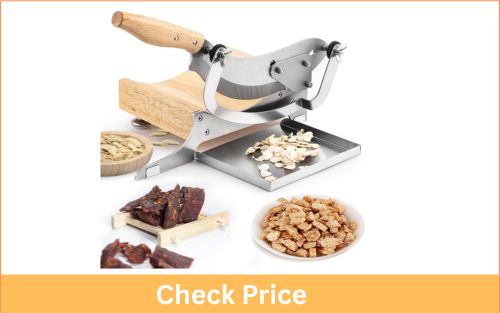
After using a few electric slicers, I wanted to try something completely different, so I picked up this Moongiantgo manual slicer. It’s not your typical kitchen machine. It’s designed more like a traditional cutter, often used for herbs and biltong, but I was curious how it would handle meat slicing in a simple, no-electric setup. When it arrived, the packaging was basic, and inside I found the wooden base slicer with dual curved blades and a small catch tray.
Design & Build Quality: The first thing that stands out is the wooden base. It gives the slicer a very different feel compared to modern electric machines. The combination of solid rubber wood and stainless steel blades makes it feel sturdy and long-lasting. It’s also compact, so it doesn’t take up much space on the counter and can be stored easily.
Adjustable Thickness Control: This slicer offers adjustable thickness from 0 to 12mm. Instead of a dial, it uses a simple stopper system to control the cut size. I tested it on dried meat and slightly firm cuts, and once adjusted properly, the slices came out fairly consistent. It takes a bit of manual control, but after a few tries, it becomes easier to manage.
Capacity & Real Performance: Since this is a manual slicer, the performance depends entirely on how you use it. I tried it with jerky-style meat and firm pieces, and it handled those well. However, for softer or fresh meat like raw bacon, it’s not the ideal choice. It works best with tougher, drier textures where the blade can grip and cut cleanly.
Cutting Mechanism & Experience: The dual curved blades are interesting. They create a natural downward pressure while cutting, which reduces the effort needed. Compared to using a knife, it definitely saves time and gives more uniform slices. That said, you still need to apply steady pressure and maintain control throughout the cut.
Ease of Use: Using this slicer feels more hands-on. There’s no motor, no buttons just place the food, adjust the stopper, and press down. It’s simple, but it does require attention and a bit of practice. Once you get used to the motion, it becomes quite efficient for specific tasks.
Cleaning & Maintenance: Cleaning is straightforward but requires care. You can rinse it under water and wipe it dry, but since the blades are very sharp, you need to be cautious while handling. Applying a small amount of oil to the blade occasionally helps maintain smooth performance and prevents rust.
Safety Considerations: Because it’s a manual slicer without a full guard system (depending on the version), you need to be extra careful while using and cleaning it. The blades are extremely sharp, so controlled handling is important, especially during repetitive slicing.
Best For
This slicer is best suited for cutting biltong, dried meat, herbs, or firm ingredients like ginger or ginseng. It’s not designed for regular soft meat slicing or large kitchen prep tasks.
What We Like
- Compact and easy to store in small kitchen spaces
- Solid wooden base gives a durable and sturdy feel
- Dual curved blades reduce cutting effort
- Adjustable thickness allows basic slice control
- No electricity needed, simple manual operation
What We Don’t Like
- Not suitable for soft or raw meats like fresh bacon
- Requires manual effort and consistent pressure
- Cleaning needs extra care due to sharp exposed blades
- Smaller tray size limits continuous slicing workflow
7. XinChangShangMao Manual Frozen Meat Slicer
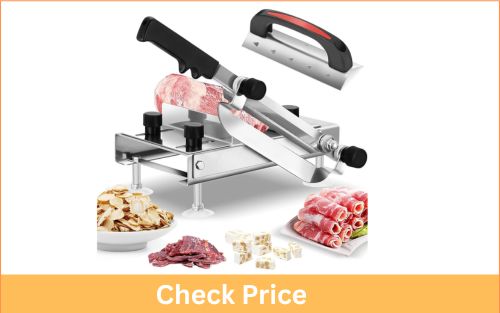
This slicer is designed specifically for frozen meat and hard vegetables, making it a niche but handy tool for home cooks who enjoy hot pot or preparing their own thin meat slices. When it arrived, it felt lightweight but solid, made mostly of stainless steel with a PVC handle for grip. The construction is simple no motors, no frills just a manual blade and adjustable thickness stop.
Design & Build Quality: At just 2.3 kg (around 5 pounds), this slicer is easy to move and store, yet the stainless steel construction feels sturdy. The 7-inch round blade is sharp and well-centered, giving a smooth slicing experience when used correctly. Its compact size doesn’t take much counter space, making it convenient for small kitchens.
Thickness & Cutting Performance: It allows thickness adjustments from 0.2mm to 25mm, which is ideal for very thin slices needed in hot pot, shabu shabu, or frozen jerky preparation. Users report that slicing solidly frozen meat is possible but can be slower, while partially thawed meat slices faster and more evenly. Logs of meat are recommended to get consistent slices along the grain.
Manual Operation: Being fully manual, it requires steady hand pressure. It’s a bit of a workout if slicing large quantities, but once you find the rhythm, it becomes fairly efficient. Safety is key, as the blade is extremely sharp, so care must be taken during both slicing and cleaning.
Cleaning & Maintenance: The smooth stainless steel surface makes cleanup straightforward. It’s best to avoid soaking in water for long periods and to dry immediately to prevent rust. Regular oiling of the bearings ensures smoother operation over time. Users also note that removing the protective plastic film from the blade before first use is essential for proper performance.
Safety Considerations: The slicer is sharp enough to cut frozen meat cleanly, so handling requires caution. Protective gloves are a good idea for first-time users, and the blade should never be used on meat with bones, as this could damage the unit.
Best For
Ideal for hot pot lovers, frozen jerky prep, thin slices of beef, lamb, or pork, and hard vegetables. Not suitable for raw, fresh meat or meat with bones.
What We Like
- Lightweight and easy to store
- Adjustable thickness allows precision slicing
- Solid stainless steel construction for durability
- Simple to clean with few nooks for meat to get stuck
- Comes with extra accessories like an extra blade, knife stone, and wrench
What We Don’t Like
- Only works on frozen or firm foods
- Requires manual effort and patience for large batches
- Blade safety is a concern if not handled properly
Buying Guide: Best Meat Slicer for Bacon
When looking for the best meat slicer for bacon, there’s more to consider than just sharp blades. A slicer can make bacon prep faster, easier, and more consistent, but the right model depends on your kitchen space, cooking habits, and the types of foods you plan to slice. This guide will highlight the key factors to help you make an informed decision.
1. Blade Material and Size
The blade is the heart of any slicer. Stainless steel blades are durable, resistant to rust, and maintain sharpness for longer periods. A 7–8 inch blade is usually sufficient for slicing bacon, though larger blades can handle bigger meat portions. Serrated blades are great for soft or semi-frozen bacon, while smooth blades are ideal for thin, precise cuts.
2. Adjustable Thickness Control
Bacon slices vary depending on personal preference and recipe needs. Look for slicers with adjustable thickness, typically ranging from 0 to 15 mm. This allows you to cut ultra-thin slices for crispy bacon or thicker pieces for sandwiches and casseroles. Some models even offer fine-tuning knobs that make it easy to achieve consistent slices every time.
3. Motor Power and Operation
For frequent use, especially if slicing partially frozen bacon, a powerful motor is essential. Electric slicers with 150–200W motors provide enough torque for smooth, even slicing without straining the machine. If you prefer quieter operation, DC motors tend to run more silently than standard AC motors, reducing kitchen noise. Manual slicers can work well for occasional use but require more effort.
4. Safety Features
Bacon slices are thin, so safety is crucial. Non-slip feet, suction cups, and blade covers are important to prevent accidents during operation. Some slicers also have child safety locks or blade guards, which are especially helpful in households with kids. Always look for a model that balances performance with secure handling.
5. Ease of Cleaning
Bacon produces grease, which can make cleanup tricky. A slicer with removable blades, trays, and food carriages allows for thorough cleaning. Stainless steel trays are easier to wipe down, and dishwasher-safe components save time. Avoid models with too many crevices where grease can accumulate, as this can affect hygiene and slicer longevity.
6. Size and Storage
Kitchen space can be limited, so compact slicers are often preferable. Foldable or detachable designs make storage easier and prevent clutter. Measure your countertop or cabinet space before choosing, and consider whether the slicer will be used frequently or only occasionally.
7. Versatility
While you may primarily slice bacon, a good slicer can handle a variety of foods. Look for models that also cut cheese, deli meats, vegetables, and even bread. Removable or dual blades (serrated and smooth) increase versatility and allow you to switch between soft and firmer foods without compromising slicing quality.
8. Customer Reviews and Warranty
Finally, check user feedback for real-world performance. Reviews can highlight issues like blade dulling, motor strain, or safety concerns. Brands that offer warranties or replacement parts provide peace of mind and show confidence in their product quality. Even if a slicer costs slightly more, a reliable model with good support can save money and frustration in the long run.
Pro Tip – Last But Not Least
- Always read the user manual before operating your meat slicer for bacon safety and efficiency.
- Keep the blade sharp by regularly cleaning and applying food-safe oil to prevent rust.
- Use the thickness adjustment feature to achieve consistent bacon slices every time without effort.
- Always secure the slicer on a stable, flat surface to avoid slipping during cutting.
- Remove and wash the food tray and blade immediately after use for hygiene.
- Never slice bones or extremely frozen items unless the slicer is specifically designed for it.
- Use a soft cloth to wipe the motor housing and avoid water contact.
- Store the slicer covered or in a dry place to protect it from dust and moisture.
- Regularly inspect screws, blade locks, and moving parts to ensure smooth, safe operation.
- Slice slowly and steadily, especially with fatty bacon, for uniform cuts and reduced accidents.
How does blade type and thickness adjustment affect the performance of a meat slicer for bacon?
Blade type and thickness adjustment are critical factors that directly impact the performance of a meat slicer for bacon. Choosing the right blade and knowing how to set the thickness properly ensures consistent, precise cuts, improves efficiency, and enhances safety in your kitchen. Understanding these features can make a significant difference, whether you are slicing for breakfast, sandwiches, or gourmet cooking.
Blade Material: Stainless steel blades are preferred for bacon slicing because they maintain sharpness longer, resist corrosion, and provide smooth, clean cuts. High-quality stainless steel reduces friction, minimizes tearing, and ensures the bacon slices uniformly, improving both presentation and cooking performance. Investing in a durable blade means fewer replacements and safer handling over time.
Blade Type: Serrated or non-serrated blades affect how the bacon is sliced. Serrated blades grip softer or fatty bacon better, preventing slipping, while non-serrated blades provide even, smooth cuts for consistent thickness. Choosing the right type can help you achieve professional-looking slices, especially for delicate or highly marbled bacon.
Thickness Adjustment Range: Adjustable thickness allows you to set the slice from ultra-thin to thick strips. Thin slices cook faster and crisp evenly, while thicker slices retain more flavor and texture. A wide adjustment range makes the slicer versatile for other foods like cheese or vegetables, expanding its usability beyond just bacon.
Precision Control: Fine control over thickness ensures uniform cooking and aesthetic presentation. Uneven slices can overcook some parts while leaving others undercooked. Proper adjustment reduces food waste and improves the overall quality of your meal, especially important when serving guests or making layered sandwiches.
Ease of Use: Blades with intuitive locking mechanisms and smooth adjustment dials simplify operation. This prevents accidental slips and allows precise settings without extensive effort. Ergonomic designs enhance comfort during repeated slicing sessions, making the process more enjoyable and efficient.
Maintenance Impact: Blade type and thickness settings also influence cleaning and maintenance. Removable blades and simple adjustment systems make it easier to wash and prevent buildup of fat, grease, or residues, prolonging the lifespan of the slicer. Regular care keeps performance consistent over time.
In conclusion, selecting the proper blade type and mastering thickness adjustment significantly improves slicing quality, efficiency, and safety. Understanding these features ensures every bacon slice meets your culinary expectations, while also maintaining the longevity and reliability of your meat slicer.
Why might an electric meat slicer for bacon be a better investment than a manual slicer for frequent use?
Electric meat slicers often outperform manual models when you slice bacon regularly. If you’re preparing bacon for a family breakfast, weekly meal prep, or entertaining, understanding why an electric slicer is typically a better investment can save time and improve consistency. The differences include power, ease, and long‑term value.
Consistent Performance: Electric slicers deliver steady slicing speed and pressure, unlike manual units that rely on your hand strength. This means every slice of bacon comes out even, reducing irregular cuts and wasted meat. Frequent use amplifies the benefit because consistency matters most when you’re doing larger batches, and a powered blade keeps results predictable.
Reduced Physical Effort: With an electric slicer, the motor does the work. For frequent bacon slicing, this saves significant physical strain, especially compared to manual machines that can tire your hand and arm. The smoother motion also minimizes mistakes and makes longer slicing sessions easier and more comfortable.
Versatility and Power: Electric models typically have stronger motors and more versatile blades, allowing them to slice soft, firm, chilled, or semi‑frozen bacon with equal efficiency. Manual slicers are best for specific tasks and often struggle with thicker or tougher cuts, while electric slicers maintain performance across a variety of meats and foods.
Time Efficiency: When you’re slicing bacon often, time adds up. Electric slicers work faster than manual ones, completing tasks in less time with minimal effort. This is especially useful in busy kitchens or when prepping for guests, as you can move from slicing to cooking much quicker without fatigue.
Safety and Control: Many electric slicers include built‑in safety features like blade guards, non‑slip feet, and safety locks. These reduce the risk of accidental cuts during frequent use. Manual slicers often lack these protections, making electric units safer choices over long‑term daily handling.
In conclusion, an electric meat slicer for bacon is usually a smarter investment for frequent use because it improves consistency, saves time and effort, and enhances safety. Over time, the convenience and reliability justify the initial cost more than a manual slicer.
FAQ About the Best Meat Slicers for Bacon
Question: What is the best meat slicer for bacon for home use?
Answer: A home bacon slicer should have adjustable thickness, sharp stainless steel blades, stable construction, and easy cleaning for precise, safe, and consistent slices.
Question: Can I use a meat slicer for bacon on other meats or foods?
Answer: Yes, most bacon slicers handle meats, cheeses, and soft vegetables, though very hard or bone-in items may damage the blade.
Question: How do I clean a meat slicer for bacon safely?
Answer: Remove the blade and tray, wash with warm soapy water, dry completely, and apply food-safe oil to maintain hygiene and prevent rust.
Question: Is an electric or manual bacon slicer better for home kitchens?
Answer: Electric slicers are faster and easier for frequent use, while manual models offer control and affordability for occasional slicing.
Question: What thickness should I set for slicing bacon?
Answer: Adjust the slicer between 1mm to 5mm depending on preference for crispiness, frying, or layering in sandwiches.
Question: Are meat slicers for bacon safe to use around children?
Answer: Yes, but only if safety locks are engaged, the slicer is on a stable surface, and children are supervised to prevent accidents.
Question: Can frozen bacon be sliced with a meat slicer?
Answer: Yes, partially frozen bacon slices more cleanly than fully thawed, but extremely hard frozen bacon may require careful handling to avoid blade damage.
Question: How long does a bacon slicer blade last?
Answer: With proper cleaning, sharpening, and maintenance, high-quality stainless steel blades typically last several years before needing replacement.
Question: What materials are best for a meat slicer for bacon?
Answer: Stainless steel blades with ABS or metal housing are preferred for durability, hygiene, easy cleaning, and consistent slicing performance.
Question: Can I store a meat slicer with the blade installed?
Answer: Yes, if the slicer has a protective blade cover, but always store in a dry, safe place away from children’s reach.